

The Buyer’s Playbook to Modern Lighting
Modern lighting relies on dynamic color temperature control. This guide compares Dim to Warm and Tunable White technology, covering working principles, control systems, advantages and limitations. Discover the ideal dynamic LED lighting solution for hospitality, office and smart space projects.
Dim to Warm vs Tunable White: Mastering Modern Lighting Design
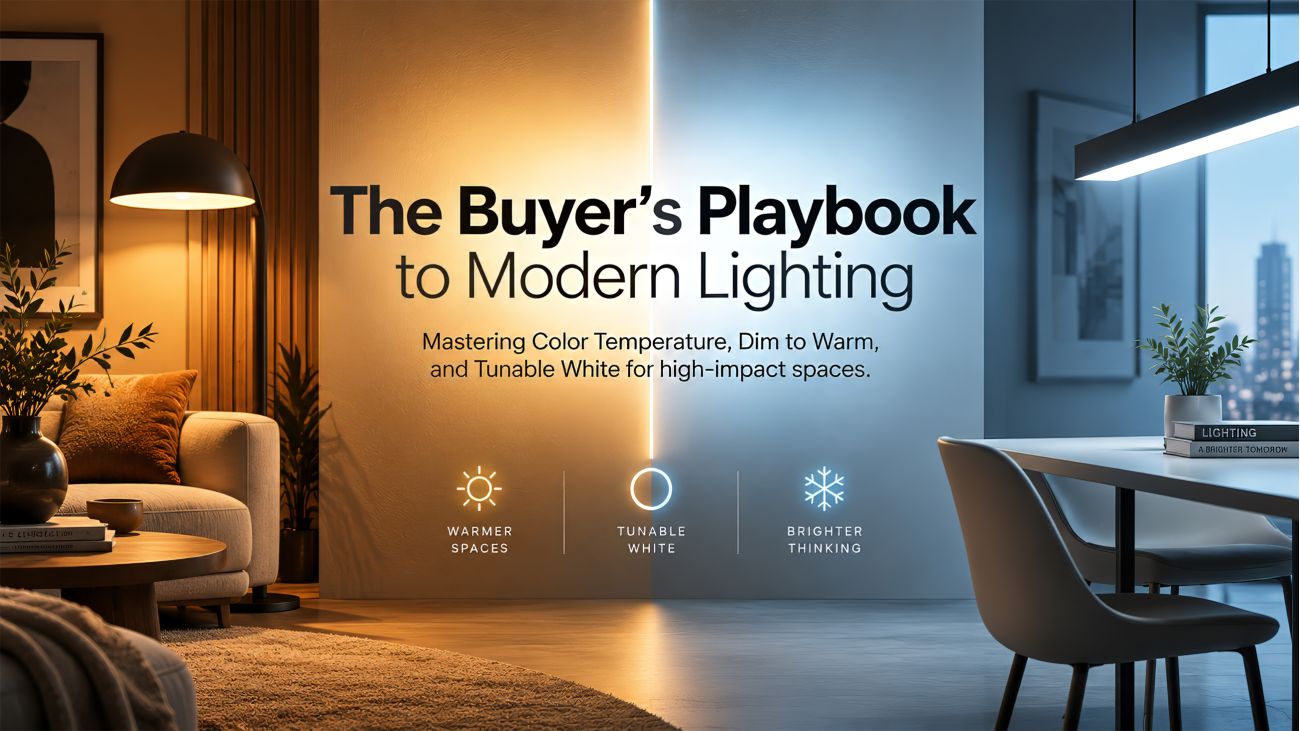
The Buyer’s Playbook to Modern Lighting
Mastering Color Temperature, Dim to Warm, and Tunable White for high-impact spaces.
The Kelvin paradox dictates that lower numbers mean warmer light
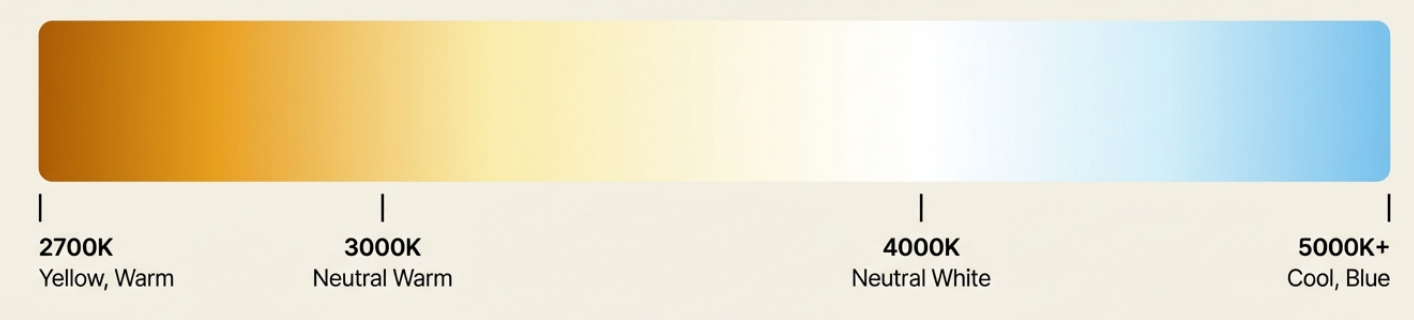
The Anti-Intuitive Rule: In the lighting world, we measure ‘white’ by referencing blackbody radiation. The lower the Kelvin (K), the warmer the visual feel. The higher the Kelvin, the cooler the light.
Three independent dials control the quality of modern lighting
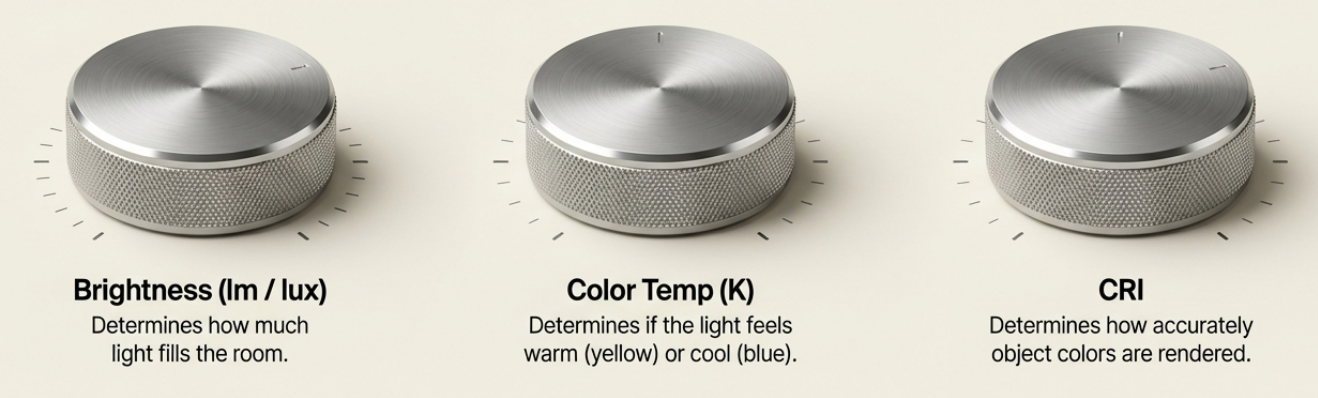
You can have blazing bright 2700K, or dimly lit 5000K. Because color temperature is entirely independent, we can engineer light to change constantly.
Human biology demands a shift away from static lighting environments
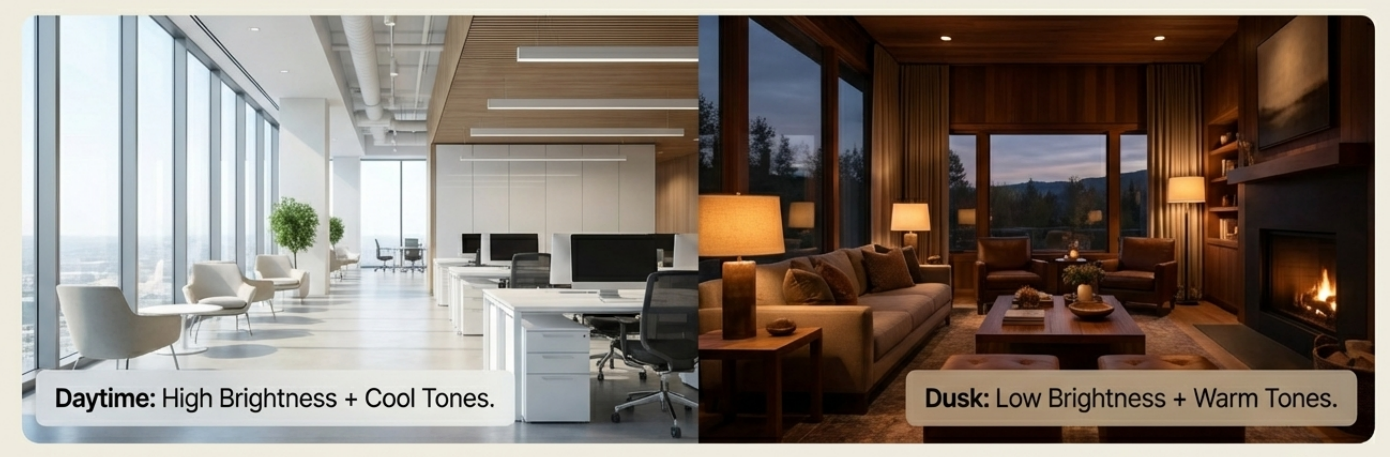
Our biological rhythms and emotions are deeply coupled with natural light shifts. Modern spaces require dynamic lighting that adapts to time, mood, and function.
The industry splits into two distinct paths for dynamic lighting
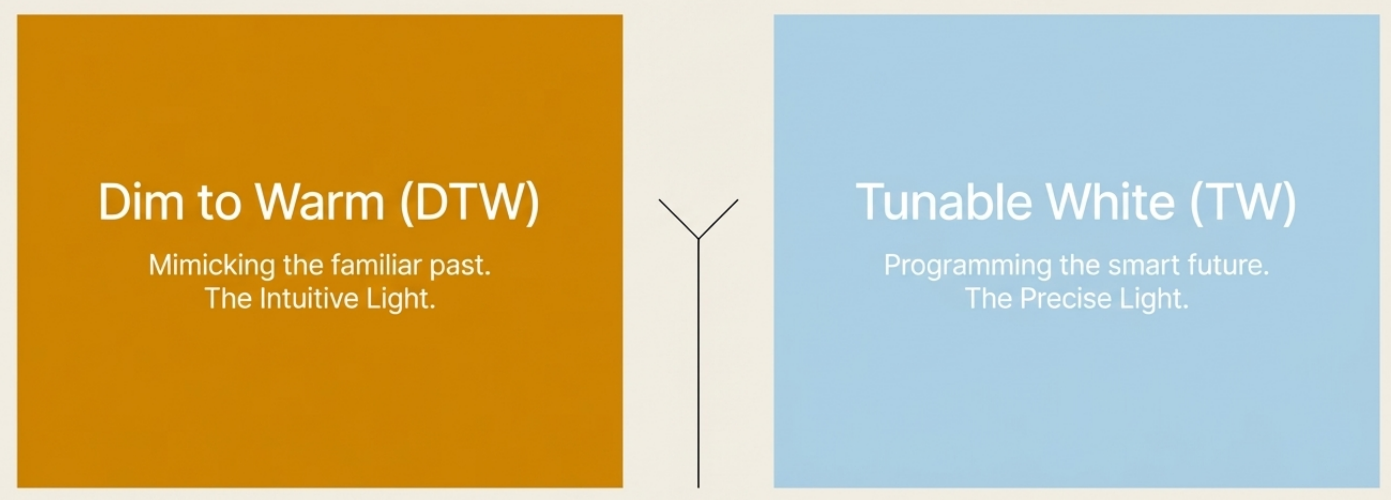
Both manipulate color temperature, but their mechanics, costs, and ideal uses are entirely different.
Dim to Warm acts as an intuitive, experience-driven light
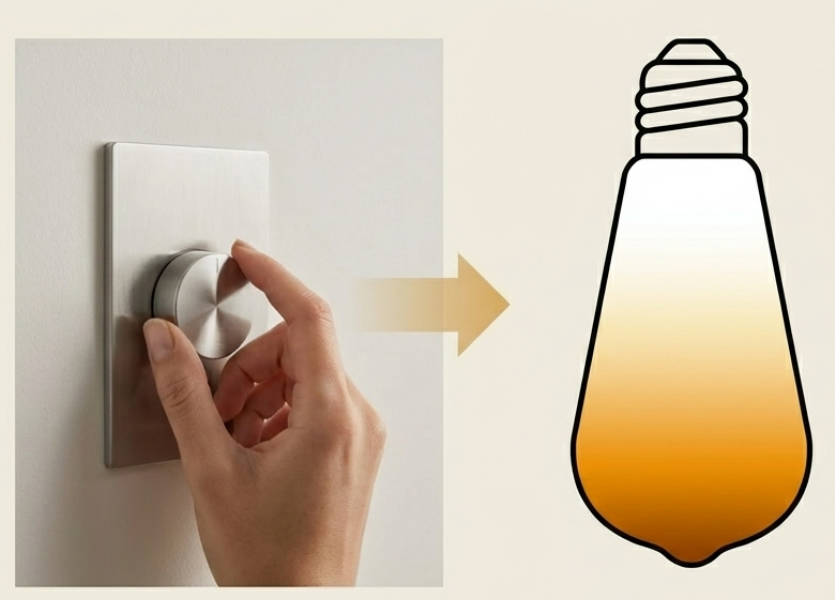
- One Control Dimension:The user only adjusts the brightness.
- Automatic Shift:As brightness drops, the color temperature automatically shifts toward the warm end.
- The Goal:Perfectly simulates the organic, cozy feel of traditional halogen or incandescent bulbs.
Hardcoded hardware blends high and ultra-warm LEDs seamlessly
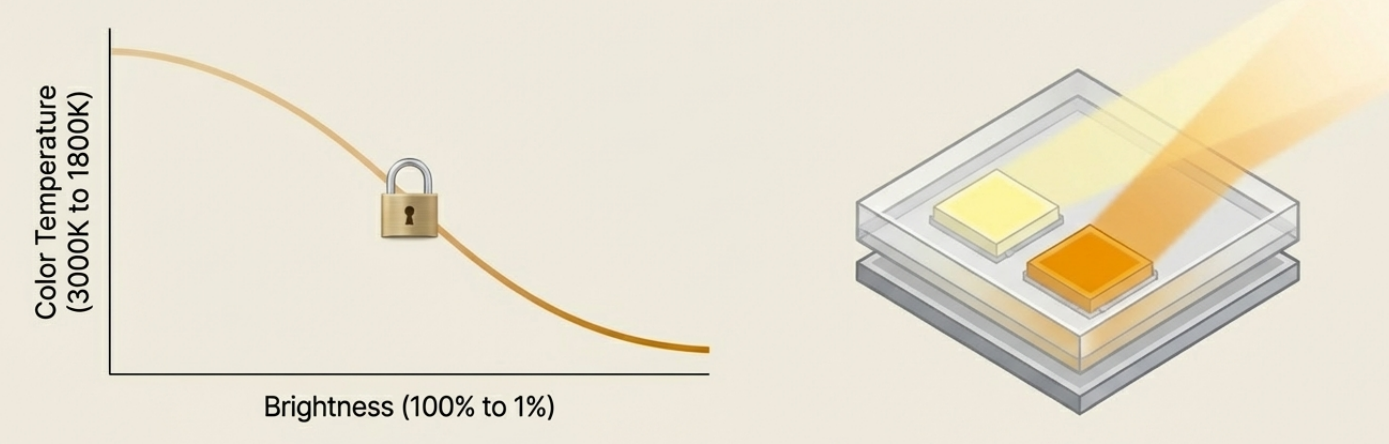
Inside the fixture, higher color temperature LEDs mix with ultra-warm LEDs (1800–2200K). The system alters their output ratio based on a fixed, factory-written brightness-to-CCT curve.
The curve is permanent. Users cannot modify the color output independently of the brightness.
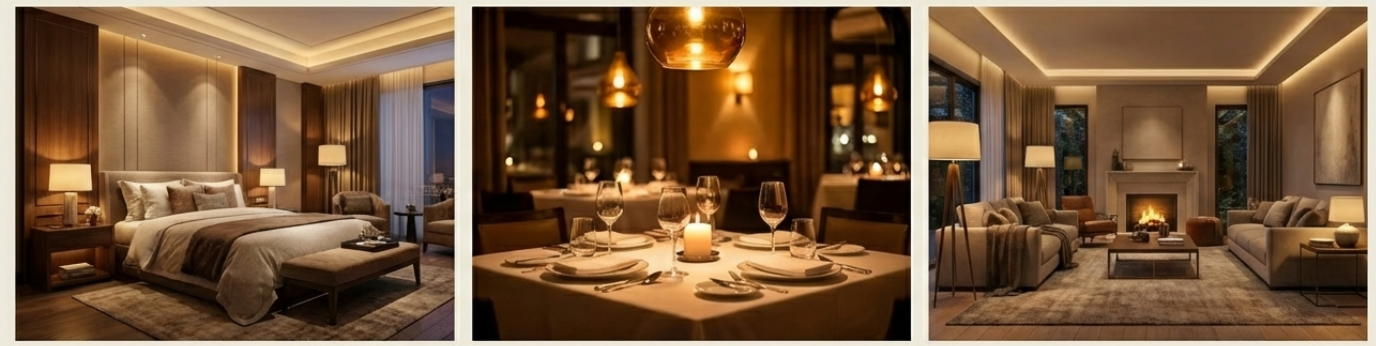
Dim to Warm dominates hospitality and atmosphere-driven spaces
|
The Wins
|
The Limits
|
|
Extremely intuitive.
Extremely intuitive. No learning curve for users. Impossible to adjust incorrectly. |
Lacks independent color control.
Lacks independent color control. Not suited for advanced smart home integration or system-wide scene expansion. |
Verdict: DTW is a product-experience solution. The ultimate vibe-maker.
Tunable White completely decouples brightness from color temperature
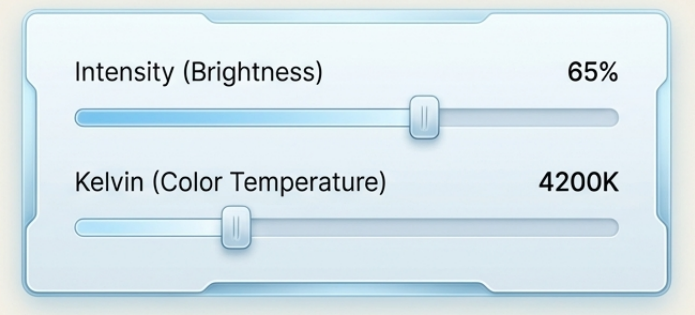
Set to 65% Brightness, 4200K
Total Control: Tell the light exactly how bright to be.
Total Precision: Tell the light exactly what color temperature to output.
Complete Independence: Change the vibe without dropping the light level, or dim the room while keeping the light crisp and cool.
Tunable White requires independent channels and a smart system brain
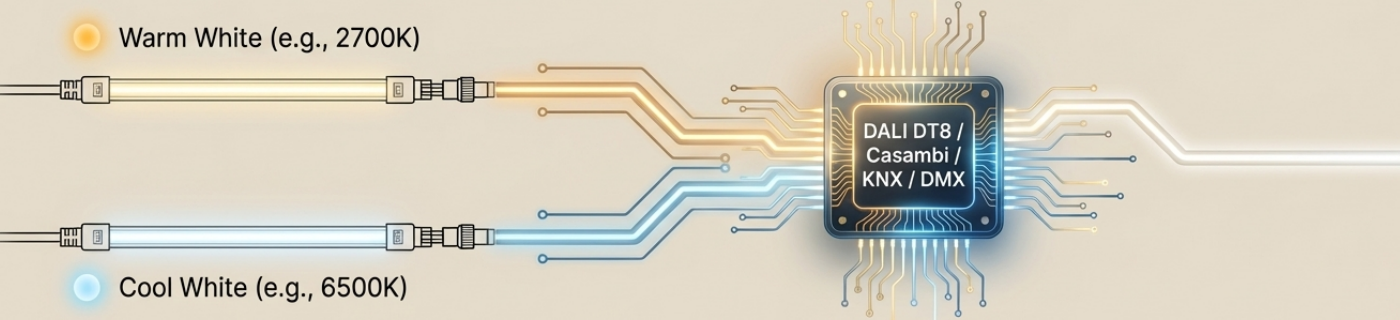
Unlike the fixed curve of DTW, Tunable White relies on real-time calculations. The control system acts as a brain, constantly mixing the warm and cool channels to hit the exact target CCT. Without a smart protocol, TW fixtures cannot function.
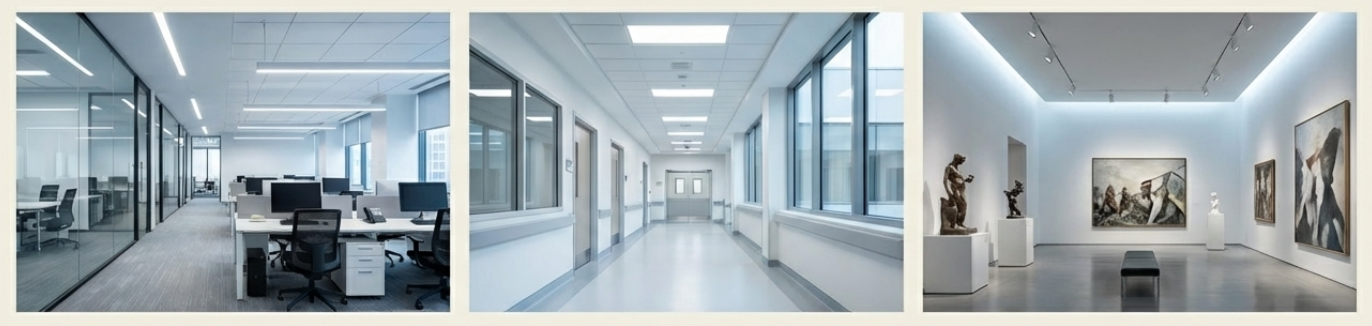
Tunable White thrives in productivity and system-driven environments
|
The Wins |
The Limits |
|
Precise and programmable. Unlocks Human-Centric Lighting (HCL) and circadian rhythm tracking. |
Requires complex commissioning. Demands strict consistency across power supplies and light sources. |
Verdict: TW is a system-capability solution. The ultimate productivity play.
The Head-to-Head Showdown
|
|
Dim to Warm (DTW) |
Tunable White (TW) |
|
Color Temp Control |
Changes with brightness |
Independently controllable |
|
User Involvement |
No understanding needed |
Requires system interaction |
|
Control Protocol |
Triac / 0-10V / DT6 |
DT8 / Smart Systems |
|
Commissioning Complexity |
Low - Plug & Play |
High - Requires programming |
|
Cost Level |
Lower |
Higher |
|
Core Positioning |
Atmosphere & Experience |
Functionality & Experience |
Real-world implementation requires matching ambition with budget

Upgrading to Tunable White isn't just buying a different bulb; it's buying into a completely new IT infrastructure.
The Buyer's Cheat Sheet: How to route your next project
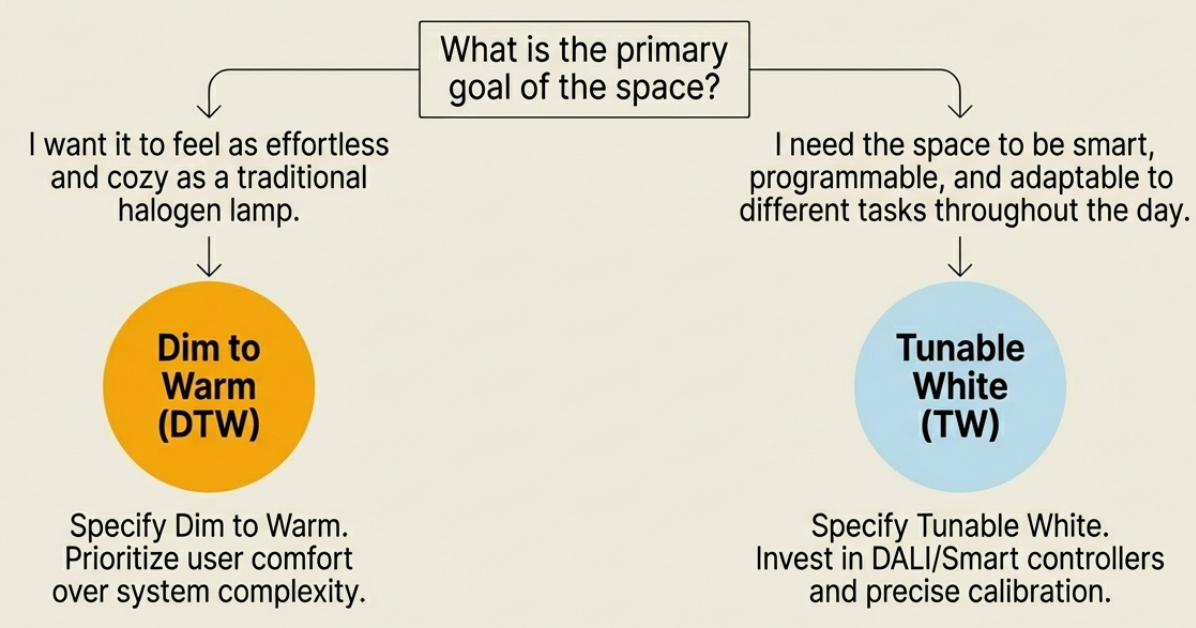
It’s not about choosing the most complex technology, it’s about fitting the scene perfectly
Mastery in modern lighting is knowing when to lean on intuitive warmth and when to deploy programmable precision. Match the technology to the human experience.
To the main pageNext article