
Panier vide

Did You Know? The True Color of an Object Can Be Rewritten by Light
Object color is not fixed. The perceived color of materials depends entirely on light spectrum and color temperature. This page explains how light reshapes color appearance, clarifies metamerism and SPD differences, compares traditional CRI and the advanced TM-30 standard, and demonstrates how tunable-spectrum LEDs deliver accurate, authentic color and texture performance for professional lighting design.
Object color is not fixed — light defines visual perception
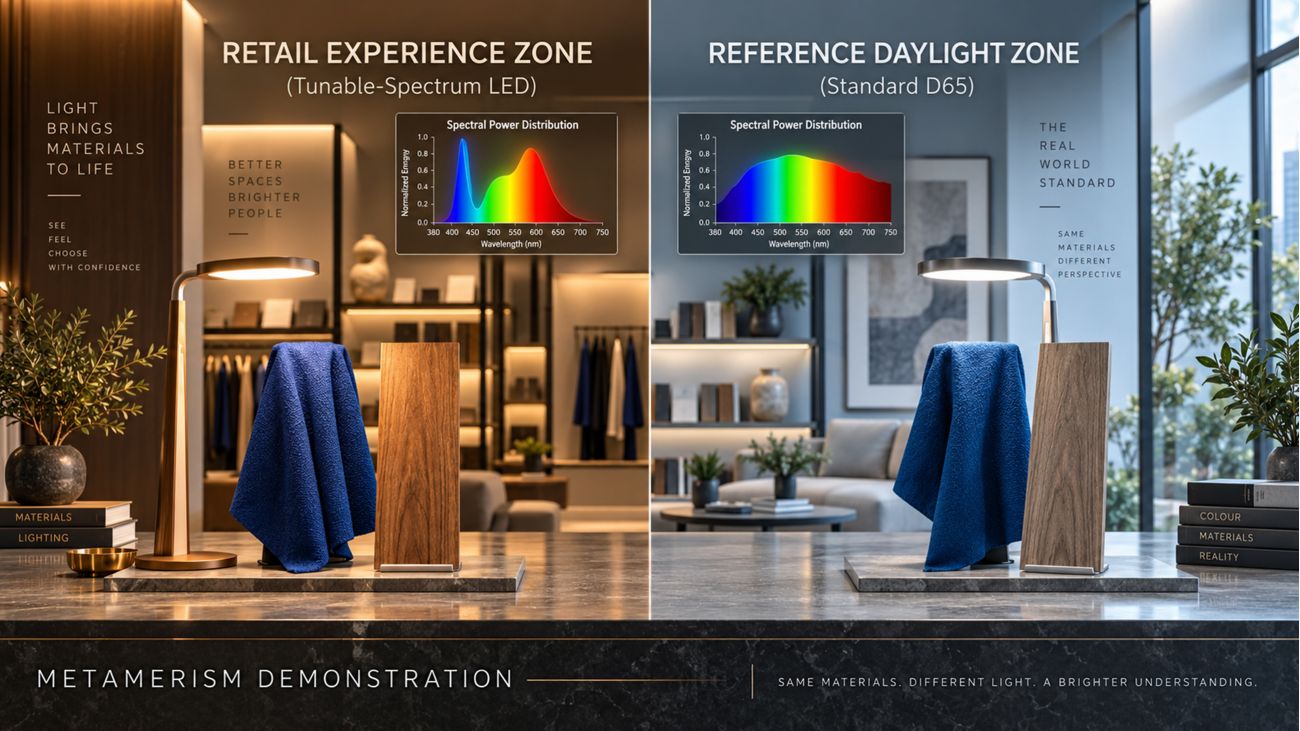
That product you loved in the store looks different at home? It's not your imagination—it's the light playing tricks.
1.Color is not a fixed property of an object.
What we see is the interaction between a light source's spectrum and the material's surface. Change the light, change the color perception.
2.Two lights with the same color temperature can behave very differently.
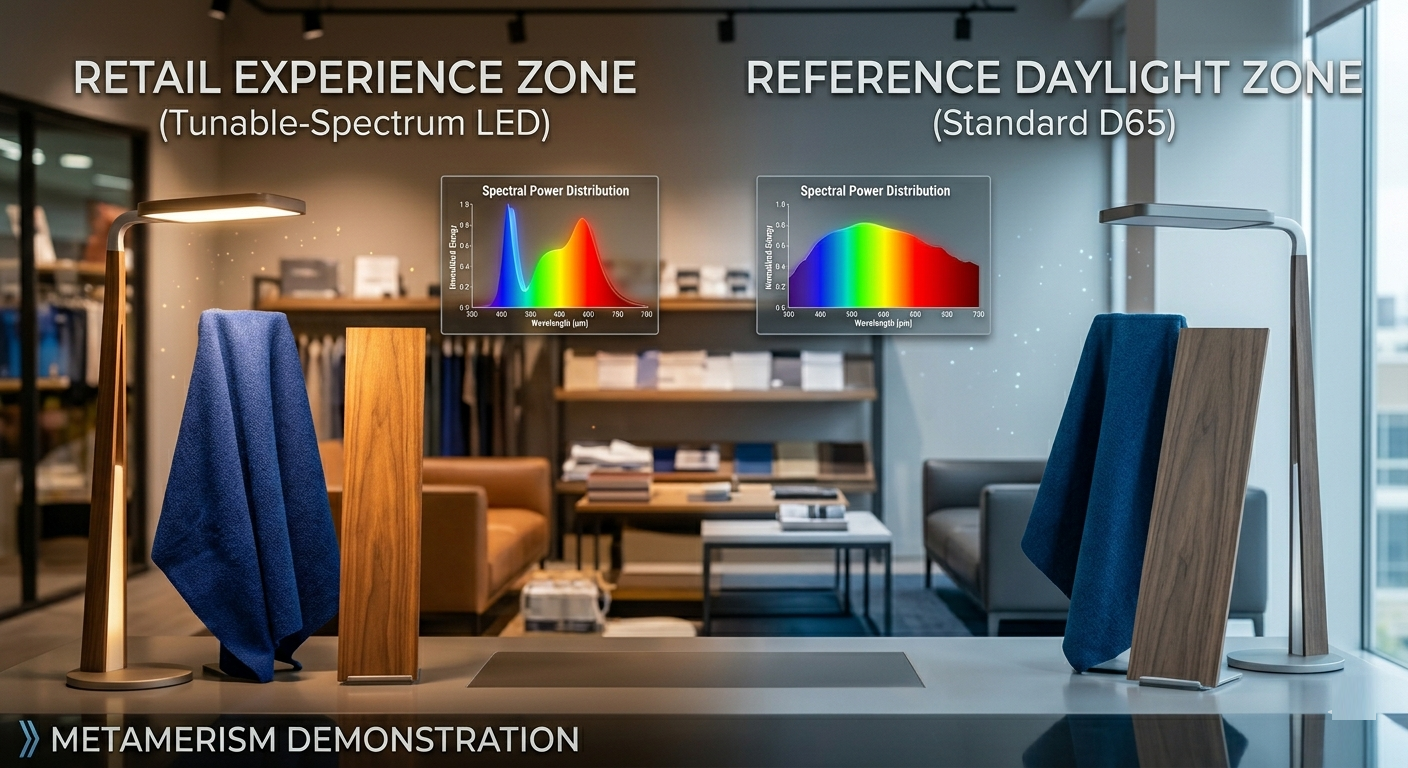
Both might be 3000K, but their spectral power distributions (SPDs) can differ—one natural and continuous, another blue-heavy. "Looks the same" ≠ "renders the same."
3.From "avoiding color shifts" to "managing visual performance."
We used to fear metamerism. Now, with tunable-spectrum LEDs, we proactively control how materials appear—making wood grain warmer, exhibits more authentic.
4.The new standard: TM‑30.
CRI is no longer enough. TM‑30 (Rf, Rg, and color vector graphics) reveals exactly how a light boosts or suppresses specific hues—giving designers real control over texture and depth.
For professionals:
Lighting design is no longer just about lux and CRI. High-level work means managing the complex relationship between light, material, and human perception.
Na naslovnicuSljedeća objava