
Panier vide

Driver Efficiency: "Same Specs, Higher Power Bill?"
Most buyers focus on wattage, brightness, or price when choosing LED lights, but they often overlook driver efficiency. This critical parameter determines how much input power reaches the LED chips versus being lost as heat, directly affecting energy consumption, thermal performance, and product longevity. Professional fixtures typically feature drivers with 85%–95%+ efficiency to ensure reliable, long-lasting performance.
What Is LED Driver Efficiency and How Does It Work? Why Driver Efficiency Affects Lighting Performance Industry Benchmark: 85%–95%+ Efficiency Standards Real-World Applications of High-Efficiency Drivers Key Takeaways: The Impact of Driver Efficiency
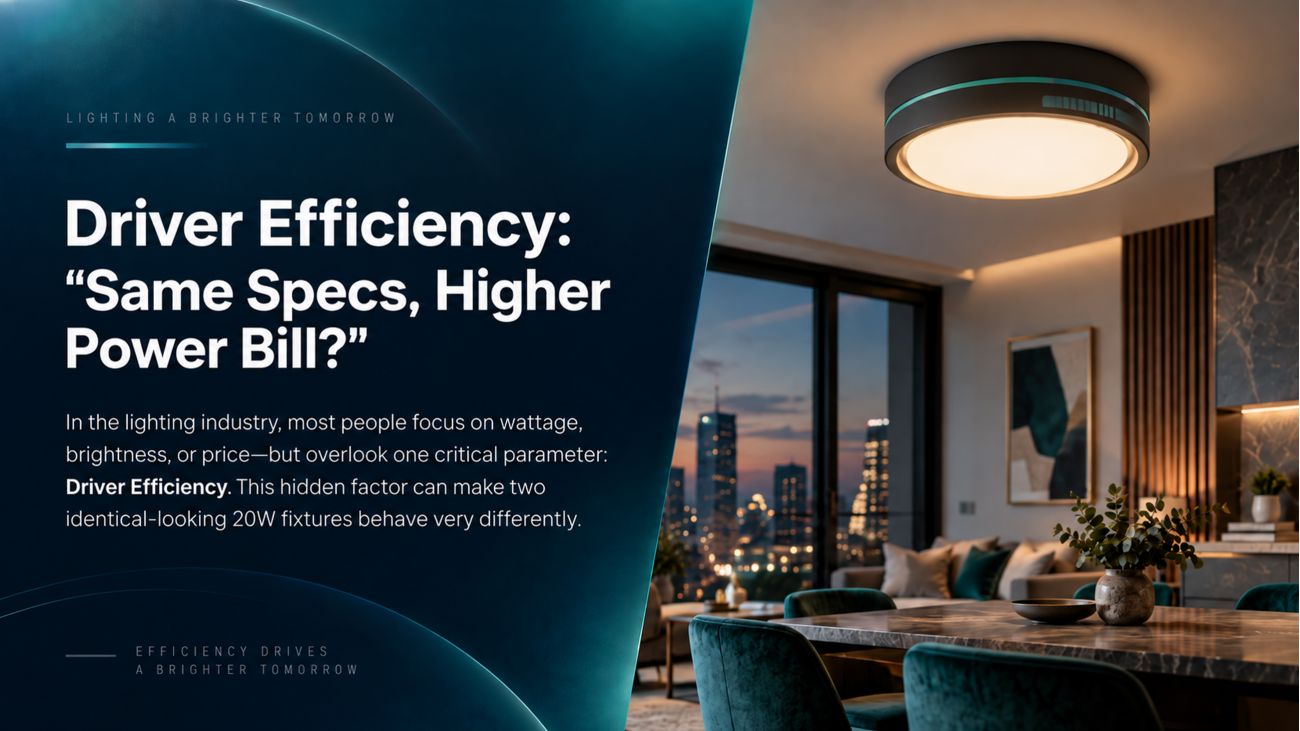
In the lighting industry, most people focus on wattage, brightness, or price — but overlook one critical parameter: Driver Efficiency. This hidden factor can make two identical-looking 20W fixtures behave very differently.
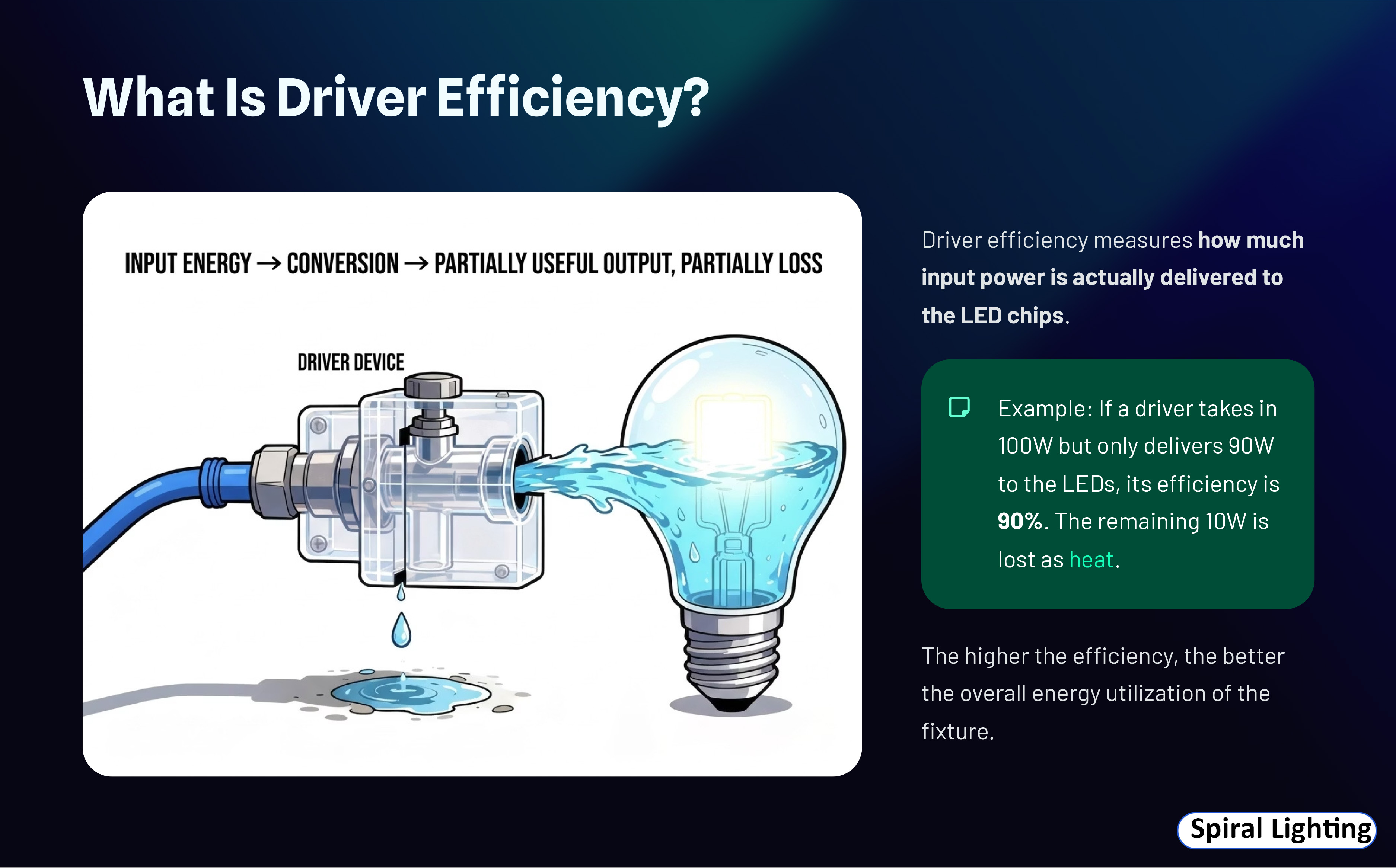
What Is Driver Efficiency?
Driver efficiency measures how much input power is actually delivered to the LED chips.
Example: If a driver takes in 100W but only delivers 90W to the LEDs, its efficiency is 90%. The remaining 10W is lost as heat.
The higher the efficiency, the better the overall energy utilization of the fixture.
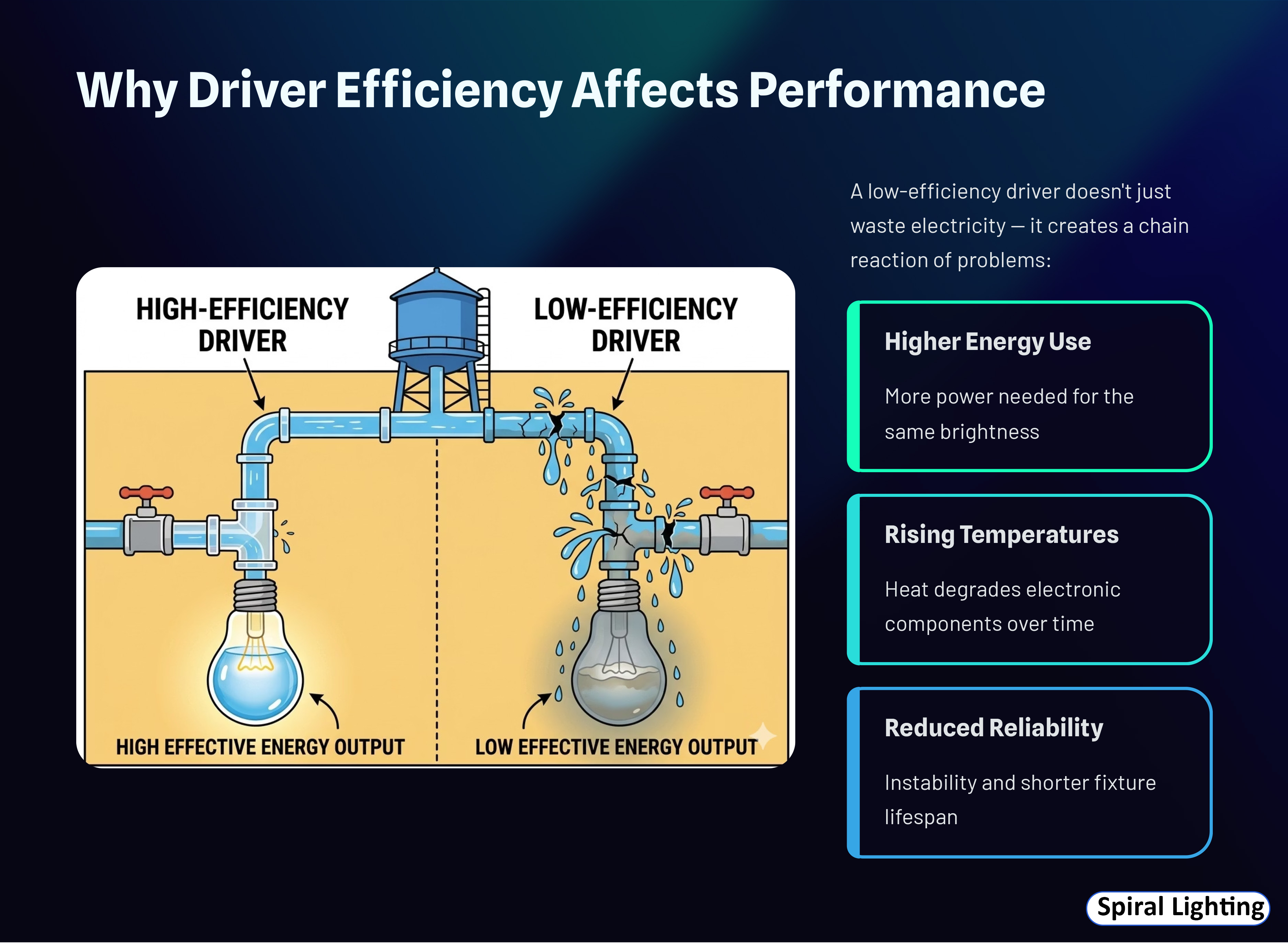
Why Driver Efficiency Affects Performance?
A low-efficiency driver doesn't just waste electricity — it creates a chain reaction of problems:
Higher Energy UseMore power needed for the same brightness
Rising TemperaturesHeat degrades electronic components over time
Reduced ReliabilityInstability and shorter fixture lifespan
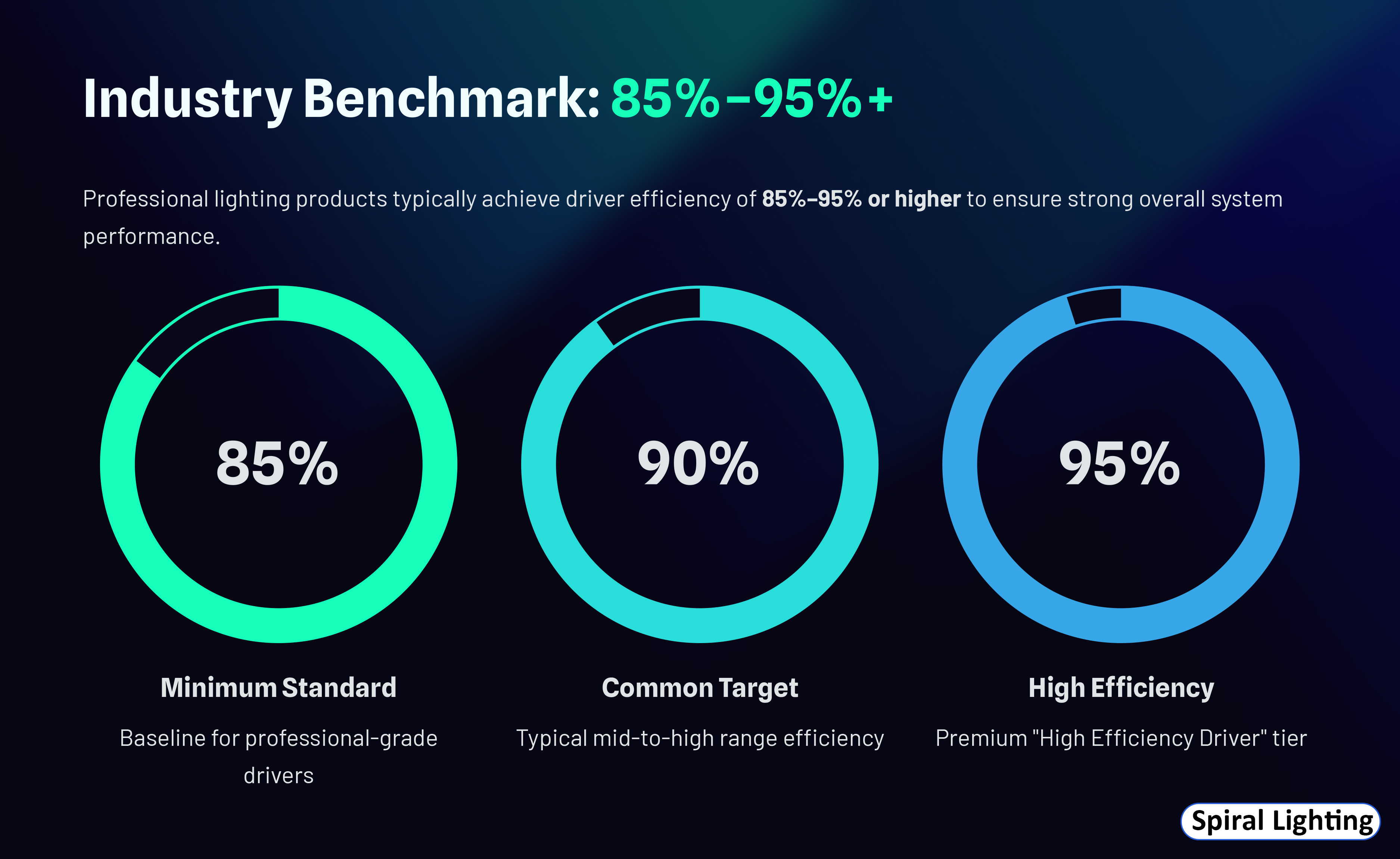
Industry Benchmark: 85%–95%+
Professional lighting products typically achieve driver efficiency of 85%–95% or higher to ensure strong overall system performance.
85%Minimum StandardBaseline for professional-grade
90%Common TargetTypical mid-to-high range efficiency
95%High EfficiencyPremium "High Efficiency Driver" tier
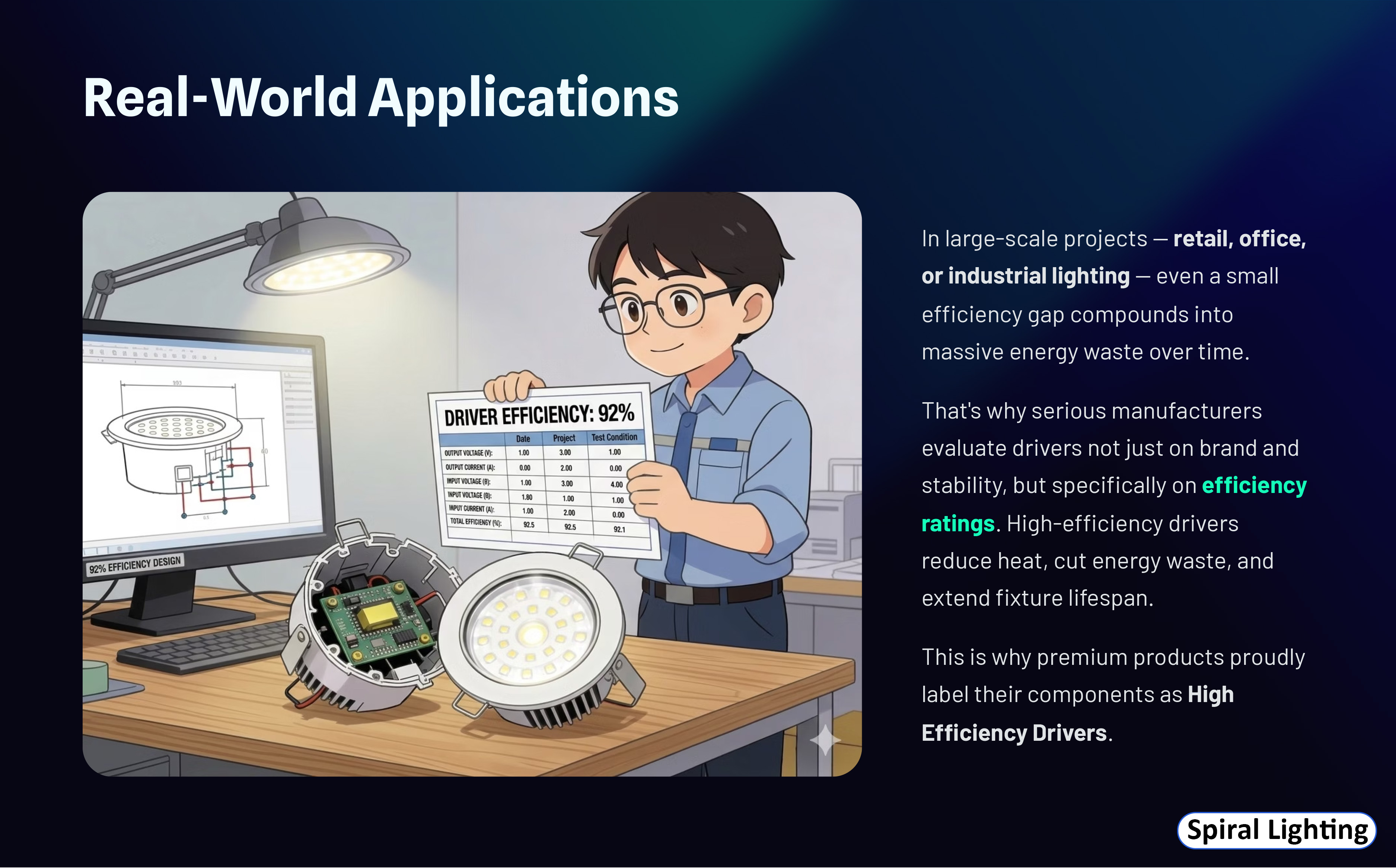
Real-World Applications
In large-scale projects — retail, office, or industrial lighting — even a small efficiency gap compounds into massive energy waste over time.
That's why serious manufacturers evaluate drivers not just on brand and stability, but specifically on efficiency ratings. High-efficiency drivers reduce heat, cut energy waste, and extend fixture
lifespan.
This is why premium products proudly label their components as High Efficiency Drivers.
The Bottom Line
Driver efficiency determines how much electricity becomes light versus heat. It directly impacts energy consumption, thermal performance, and product longevity — making it one of the most important
yet overlooked factors in lighting design and procurement.
When evaluating fixtures, do you check driver efficiency — or do you focus mainly on LED brand, wattage, or brightness? Share your experience.
Na naslovnicuSljedeća objava