

Many buyers look at LED lifetime claims — but few know how to verify them
Manufacturers often advertise 50,000‑hour LED lifetime. However, this figure depends heavily on LM‑80 test parameters and TM‑21 calculation rules. This guide shares four essential checks to help buyers distinguish marketing numbers from real‑world LED performance.
Is 50,000‑Hour LED Lifetime Real?
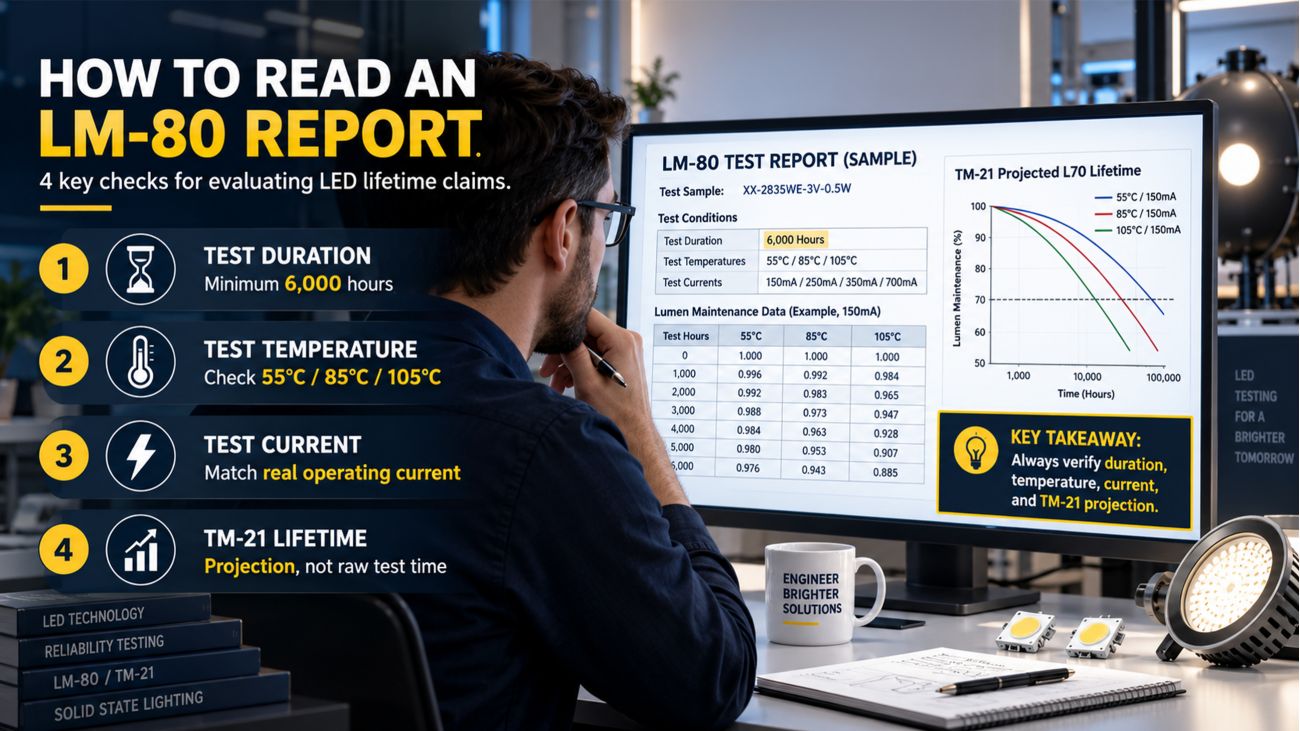
A product brochure may say 50,000 hours lifetime, but the real question is:
How was this number calculated?
For LED lighting products, the LM-80 report is one of the most important documents to understand the reliability of the LED package, array, or module.
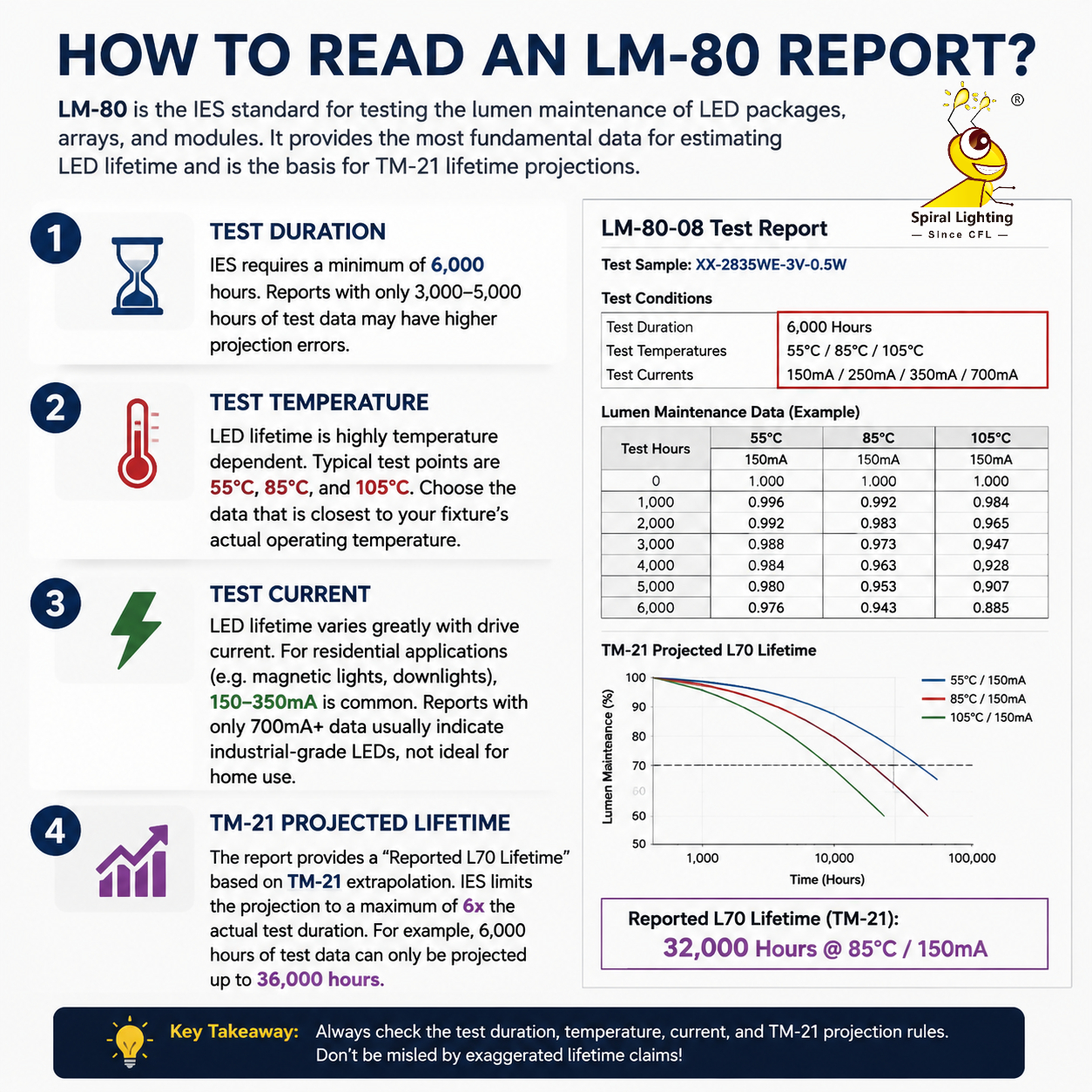
Here are 4 key points every lighting buyer should check:
1️⃣ Test Duration
A reliable LM-80 report should include sufficient test hours.
Short-term testing with aggressive lifetime projection can create misleading results.
2️⃣ Test Temperature
LED degradation is highly temperature-dependent.
Always check whether the test condition matches the actual working environment of the fixture.
3️⃣ Test Current
Driving current directly affects LED stress and lumen depreciation.
A test conducted under high current conditions may not represent residential lighting applications.
4️⃣ TM-21 Projected Lifetime
L70 lifetime is not simply a marketing number.
It is calculated based on actual LM-80 test data and must follow TM-21 projection rules.
A professional supplier should be able to explain:
Where the data comes from
Under which conditions it was tested
How the lifetime claim was calculated
Because in lighting, a longer lifetime claim does not always mean better quality.
The real value is in transparent data, proper testing, and engineering reliability.
What do you usually check first when evaluating an LED supplier?
LM-80 report, test samples, certifications, or field performance?
Mobile Phone
WhatsApp:+86 19818738919
Email Address
billy@spiral-lighting.com
Na naslovnicuSljedeća objava