

PCB vs PCBA: The Difference Every Electronics Buyer Should Know
PCB is a bare conductive circuit foundation, while PCBA is a fully assembled and functional circuit module. Knowing the differences between PCB and PCBA helps electronics purchasers make accurate orders, reduce costs and guarantee product stability for medical, automotive, industrial and consumer electronics.
What Is PCB: Definition and Core Features
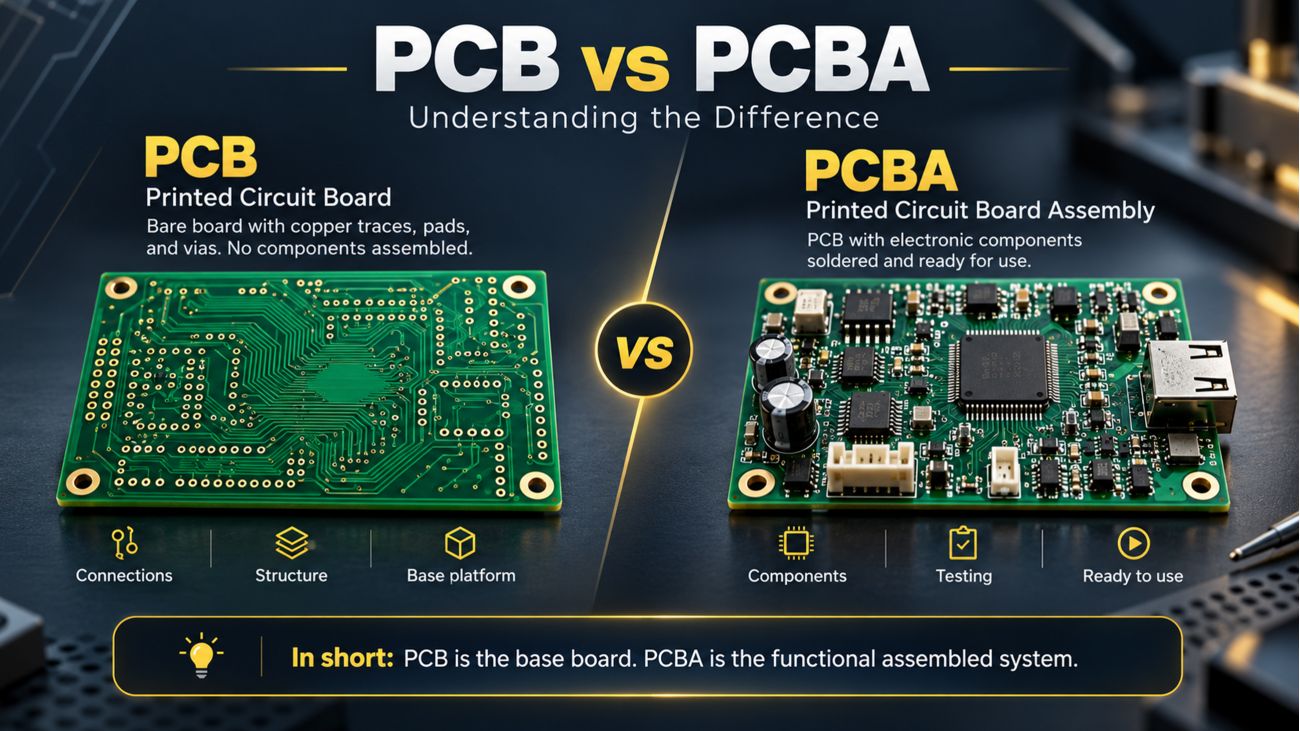
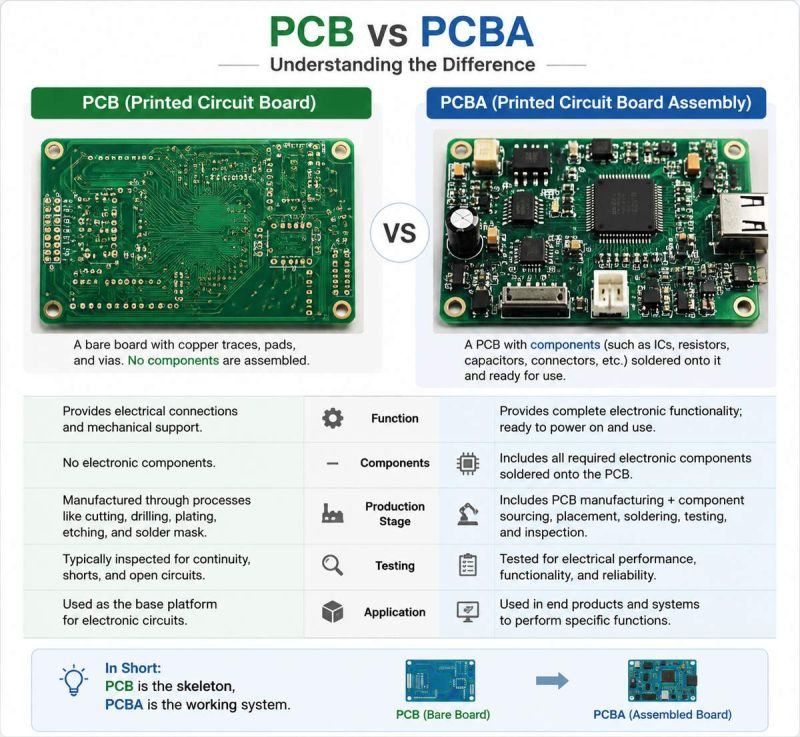
1.PCB (Printed Circuit Board) refers to bare circuit boards etched with copper traces on insulating substrates, featuring only wiring and solder pads without any electronic components. It works merely as a conductive carrier and cannot run independently when powered on.
2.PCBA (Printed Circuit Board Assembly) is a finished functional module formed by soldering chips, resistors, capacitors and other parts onto a PCB via SMT and DIP processes.
For electronics purchasers, confusing the two causes procurement errors. PCB focuses on substrate precision, while PCBA emphasizes assembly yield and electrical testing. PCB serves as the foundation, and PCBA is the usable circuit core inside medical devices, automobile electronics, industial electronics, smartphones, controllers and home appliances. Distinguishing them helps buyers correctly divide orders, control costs and avoid delivery mistakes.
As a strong manufacturing service partner, we not only provide a high-quality bare board but also support:
✔ DFM optimization
✔ Component sourcing
✔ SMT/THT assembly
✔ AOI, X-Ray quality inspection
✔ Functional testing
✔ Mass production support
Mobile Phone
WhatsApp:+86 19818738919
Email Address
billy@spiral-lighting.com
Na naslovnicuSljedeća objava