

The Hidden Dealbreaker in LED Sourcing (And why cheap lamps cost the most)
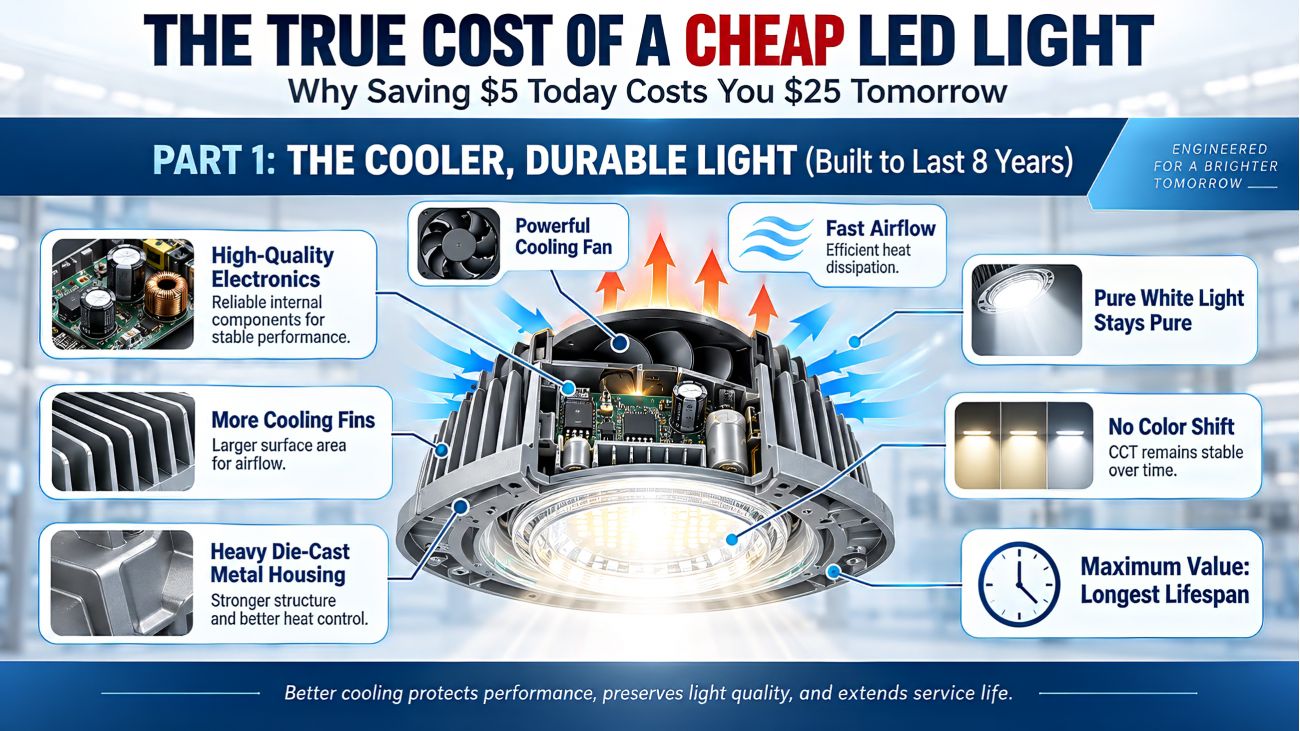
Most buyers only focus on LED lumens, CRI, CCT and appearance when sourcing lights. However, professional thermal management is the hidden core factor that differentiates premium and low-quality fixtures. Poor heat dissipation causes severe lumen depreciation, CCT color shift, yellowing light, and driver capacitor burnout, leading to shortened lamp lifespan. Premium LED lighting adopts die-cast aluminum housing and optimized cooling structures to maintain long-term color consistency and stable performance, avoiding post-installation failure and after-sales costs for architectural and recessed lighting projects.
Why Thermal Design Determines LED Lighting Lifespan and Stability
When sourcing LEDs, most procurement and product managers focus on the obvious: lumens per watt, CRI, CCT, and aesthetics.
But anyone seasoned in the lighting industry knows the real differentiator isn't what you see—it’s what you don't see.
It’s Thermal Management.
We often call LED a "cold light source," but that’s a misconception. While the beam doesn't emit infrared heat, the LED chip itself generates massive internal heat. If that heat isn't dissipated, two things happen rapidly:
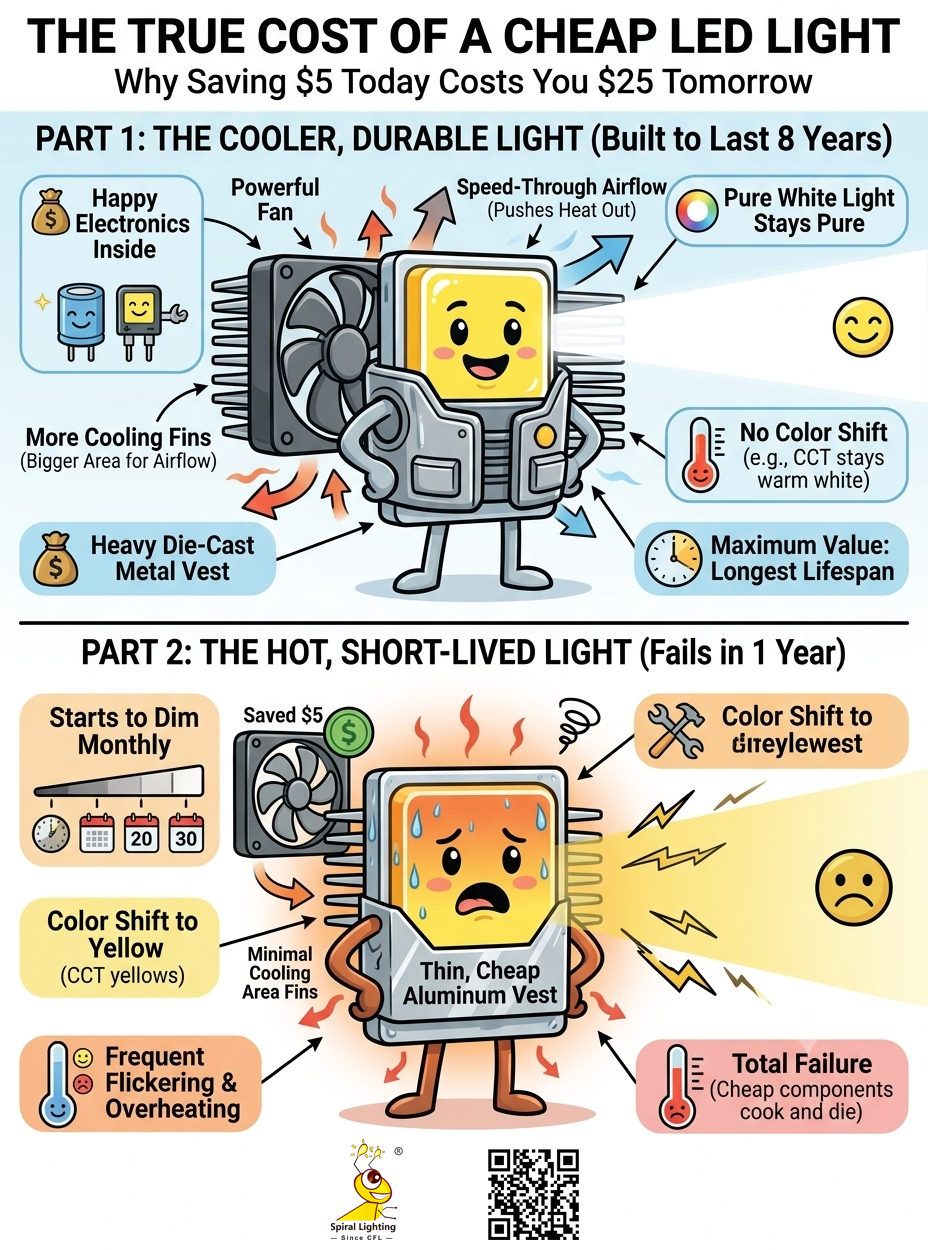
1.Accelerated Lumen Depreciation & CCT Shift: High temperatures degrade the phosphor layer. That perfect 3000K warm white you signed off on? After 12 months of poor dissipation, it shifts, yellows, and dims.
2.Driver Failure: In 80% of field failures, the LEDs are perfectly fine. It’s the electrolytic capacitors in the driver that cooked to death because of a cheap housing.
The Reality of the Price Gap:
Why does one architectural downlight cost $5 while another costs $25?
Often, it's the hidden engineering. Cheap fixtures use thin-gauge aluminum or thermal plastics that look bulky but have terrible thermal conductivity. Premium fixtures utilize heavy die-cast aluminum, integrated cooling fins, and calculated airflow paths.
This becomes critical in modern recessed or trimless installations. When a fixture is buried inside a tight ceiling cavity, surrounded by insulation, a lab-tested lifetime of 50,000 hours can easily drop to 10,000 hours if the thermal environment stifles it.
The Golden Rule for Sourcing:
A great luminaire isn't defined by how stunning it looks on Day 1. It’s defined by whether it retains that exact same light quality, color consistency, and stability in Year 5 and Year 8.
Next time you evaluate a vendor sample, don't just look at the light output. Weigh it. Check the junction temperature specs. Look at the housing structure. Because the real price gap isn't in the bill of materials—it’s in the cost of future claims.
How do you evaluate thermal reliability when vetting new lighting manufacturers? Let's discuss below.
Mobile Phone
WhatsApp:+86 19818738919
Email Address
Na naslovnicuSljedeća objava