

LED Flicker: Invisible but Harmful Effects?
LED flicker is an easily ignored lighting hazard invisible to naked eyes, which causes eye strain, headaches and safety risks. Learn the causes of light flicker, its harm to human health, and our standard-compliant flicker-free LED driver & circuit design for offices, factories and commercial projects.
Why LED Flicker Is a Hidden Hazard in Lighting Design
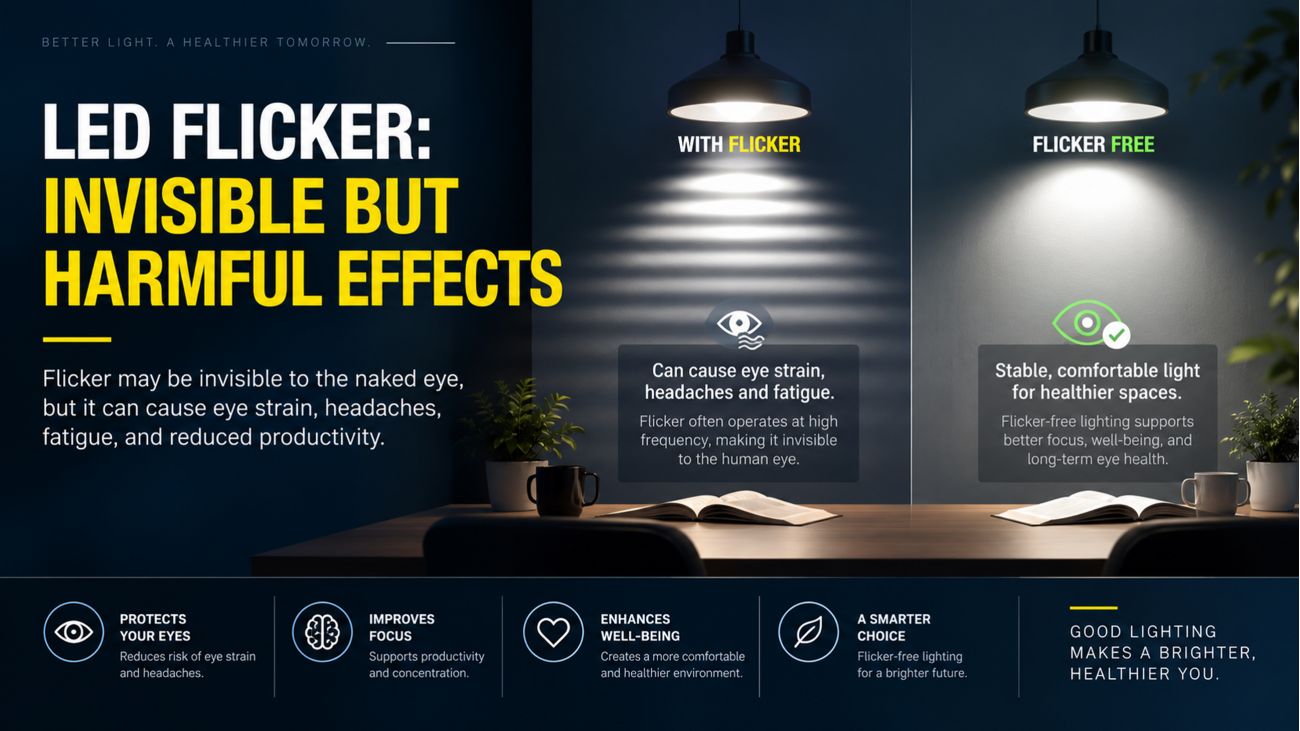
LED flicker is one of the most overlooked issues in lighting design—mainly because it is often not visible to the human eye.But “invisible” does not mean “harmless.”
In reality, flicker can significantly affect human comfort, health, and even safety in professional environments.
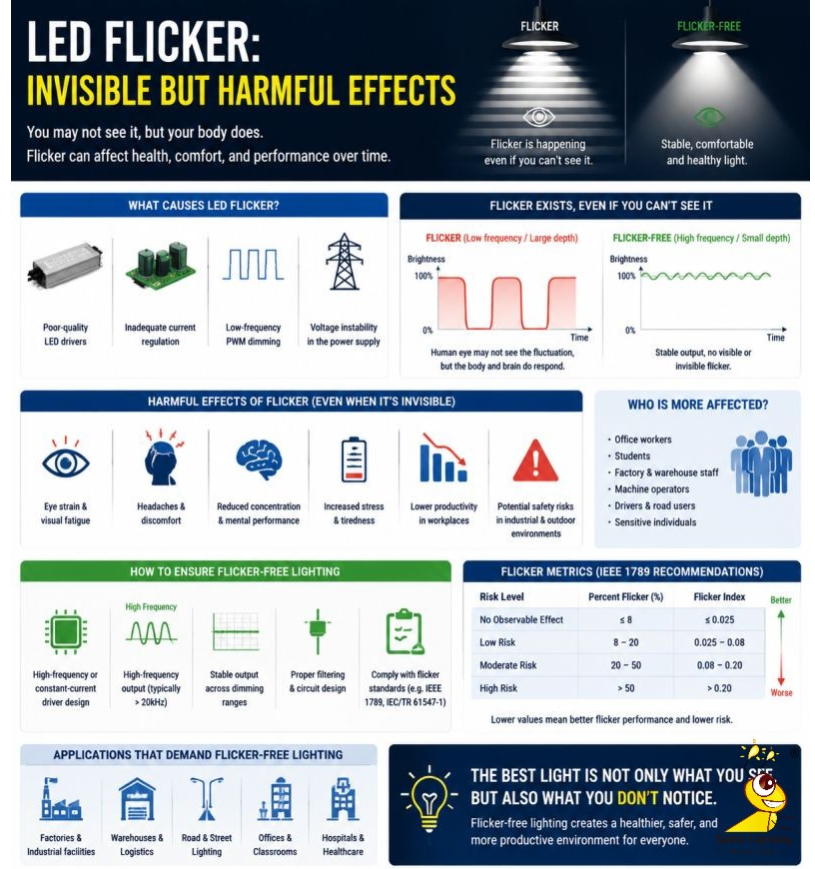
LED flicker is typically caused by:
Poor-quality LED drivers
Inadequate current regulation
Low-frequency PWM dimming
Voltage instability in the power supply
While the light may appear stable, rapid fluctuations in brightness can still occur at a frequency that the human eye does not consciously detect.
However, the human body does respond.
Long-term exposure to flicker has been associated with:
Eye strain and visual fatigue
Headaches and reduced concentration
Increased stress levels
Reduced productivity in workplaces
Potential safety risks in industrial or outdoor environments
In critical applications such as factories, warehouses, road lighting, and offices, flicker-free lighting is not a luxury—it is a requirement for healthy visual environments.
True flicker control is not just about “reducing visible flicker,” but about ensuring:
High-frequency or constant-current driver design
Stable output across dimming ranges
Proper filtering and circuit design
Compliance with flicker standards (e.g., IEEE 1789 recommendations)
As LED technology continues to evolve, lighting quality is no longer defined only by efficiency or brightness.
It is also defined by how stable and comfortable the light feels over time.
Because the best lighting is not only what you see — but also what you don't notice.
Mobile Phone
WhatsApp:+86 19818738919
Email Address
billy@spiral-lighting.com
Na naslovnicuNext article