
El carrito esta vacío

Ever walked into a room, waited for the light to turn on… and nothing happened
Radar sensor LED lights adopt advanced microwave induction technology based on the Doppler effect. Different from traditional PIR infrared sensors that only sense heat, radar sensors transmit high-frequency radio waves to detect moving objects through glass, wood and thin walls, offering higher sensitivity and stability. This article explains the working principle of radar inductive lights and analyzes common failures caused by signal interference, incorrect installation position and component aging.
Radar Sensor vs PIR Infrared Sensor Lighting

We’ve all been there. Sensor lights are supposed to make our lives easier, but when a radar-inductive LED light fails, it can be frustrating.
But have you ever wondered how that "magic" actually works when it is working?
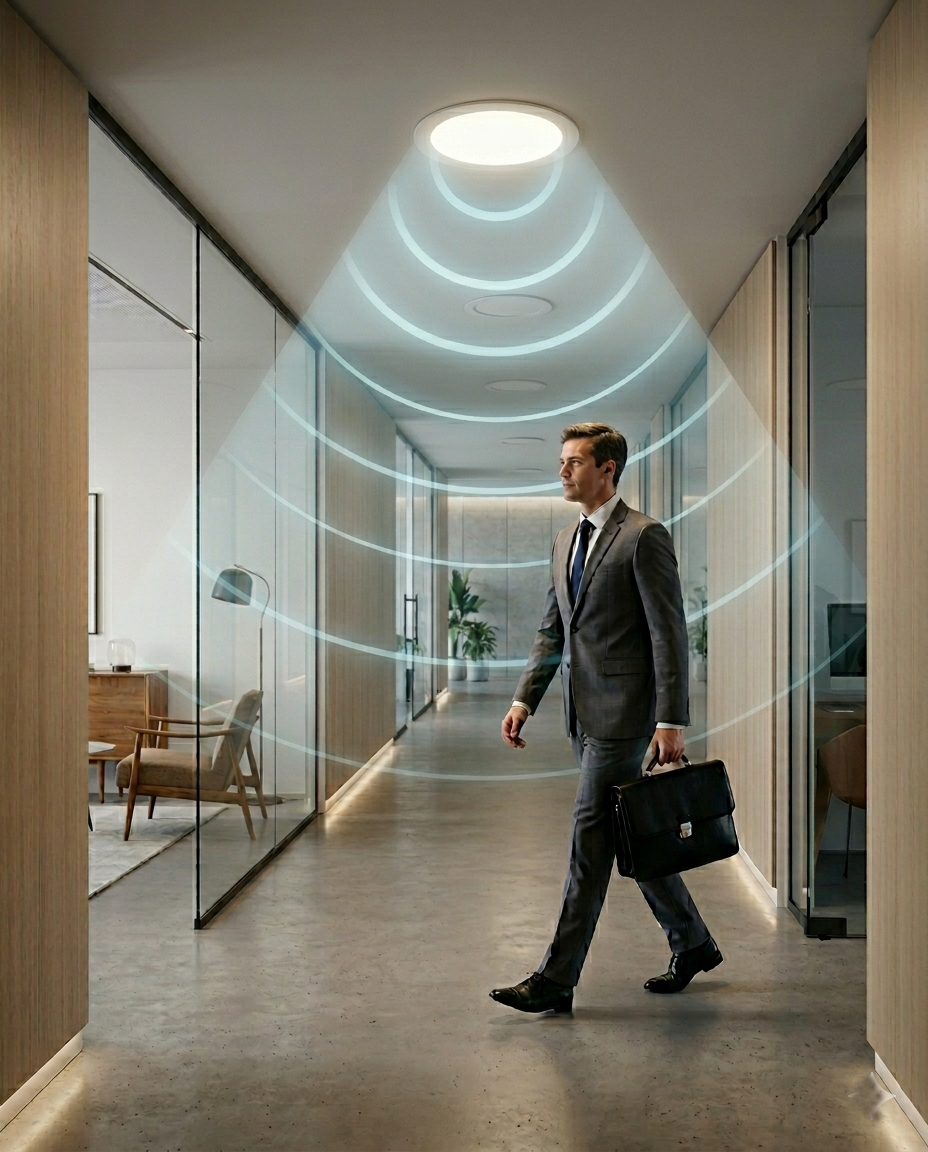
Unlike old-school infrared (PIR) sensors that only detect body heat, Radar Sensors (or microwave sensors) are much smarter. Here is the simple science behind them:
- The Echo Effect: The light emits high-frequency radio waves (invisible to us).
- The Bounce: These waves hit objects in the room and bounce back to the sensor.
- The Trigger: If something is moving, the wave frequency changes (the Doppler effect). The sensor detects this change and instantly flips the light on! Because radar waves can pass through glass, wood, and even thin walls, they are incredibly sensitive and reliable—until they aren't. When they fail, it’s usually due to signal interference, improper positioning, or component wear.
Have you experienced radar sensor failures in your recent projects? What was the culprit? Let's discuss in the comments!
Na naslovnicuSljedeća objava