
El carrito esta vacío

Light and Living Environment A New Direction for the Lighting Industry
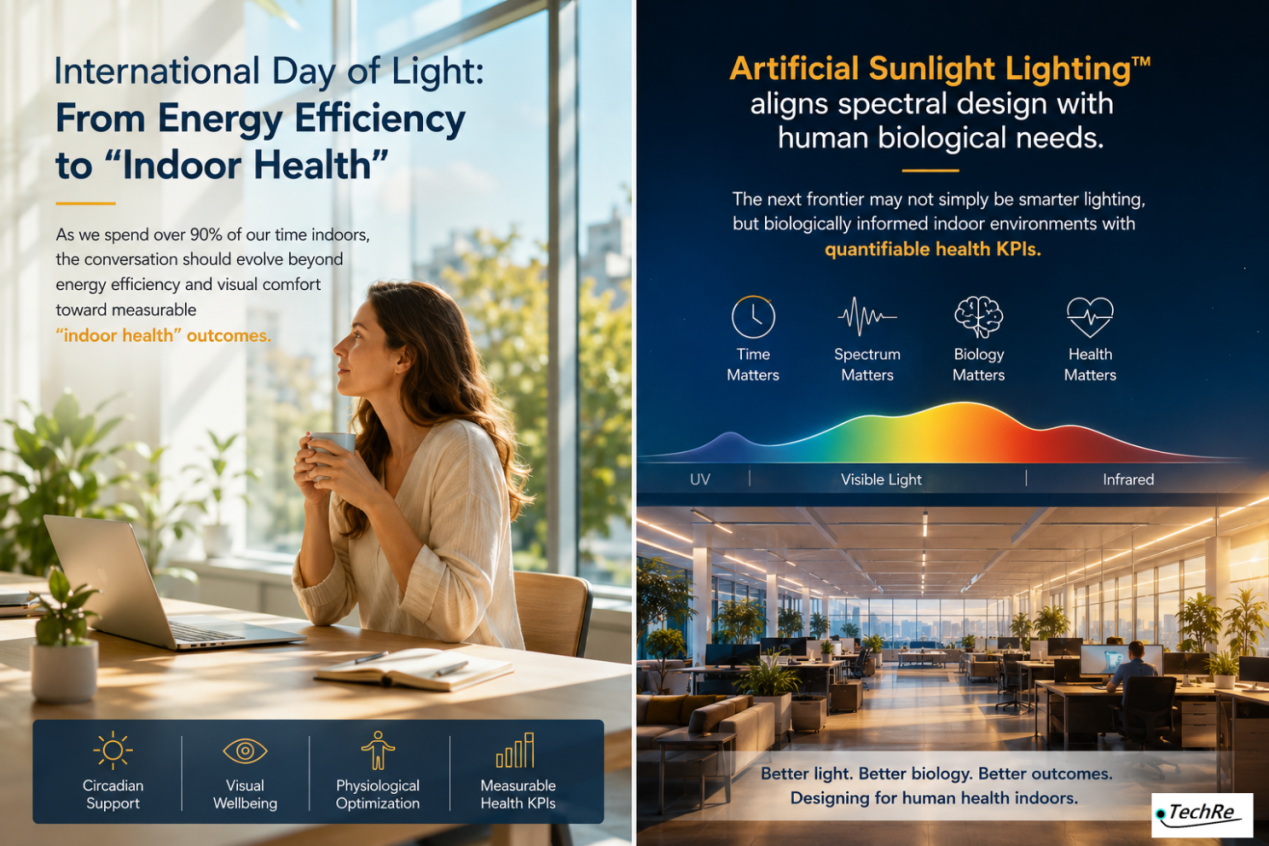
Modern lighting design is evolving beyond visibility and energy saving. With people spending over 90% of their time indoors, human-centric and health-measurable lighting has become the new industry frontier. Artificial sunlight lighting scientifically optimizes indoor light spectrum to match natural daylight features, supporting human physiology, improving comfort, productivity and long-term indoor health. It abandons exaggerated marketing concepts and focuses on transparent, measurable and responsible indoor lighting performance.
The Evolution of Modern Lighting Design
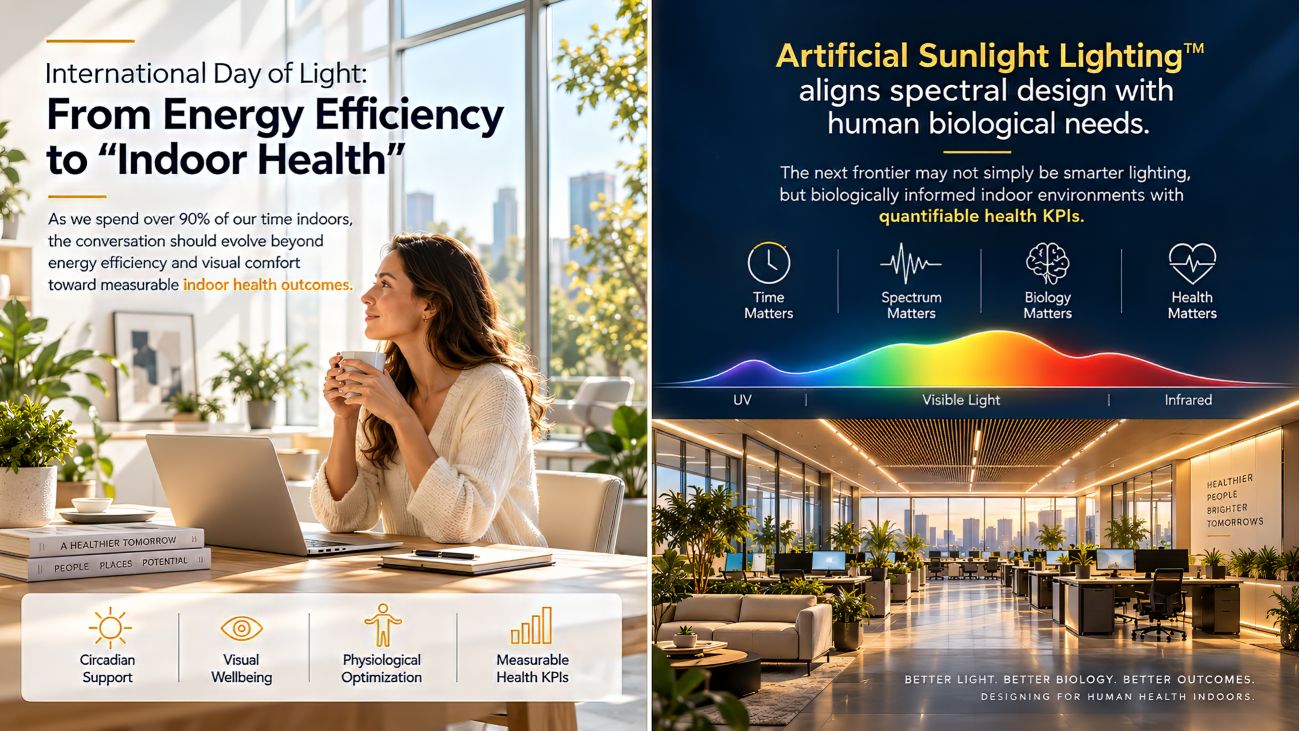
It is worth reflecting on how profoundly light shapes human life — not only through vision, but also through biology, behavior, wellbeing, productivity, and potentially long-term health outcomes.
For decades, the lighting industry has achieved remarkable progress in efficiency, controllability, cost reduction, and visual performance. These advances transformed how buildings, cities, workplaces, and homes are illuminated.
But a larger question is now emerging.
As humans spend more than 90% of their time indoors, should lighting design continue to focus primarily on visibility and energy consumption?
Perhaps the next frontier is not simply “smart lighting,” but measurable indoor health.
## Why Artificial Sunlight Lighting Matters
Natural daylight is an extraordinarily complex biological stimulus. It changes continuously throughout the day across intensity, spectrum, timing, directionality, and environmental context.
No artificial system can truly replicate the sun.
However, Artificial Sunlight Lighting may represent an important step toward better alignment between indoor spectral environments and human biological needs.
The goal should not be marketing claims around “true sunlight” or simplistic “full spectrum” narratives. Instead, the opportunity lies in designing indoor light environments that more intelligently support human physiology while remaining scientifically measurable and technically transparent.
Historically, lighting standards focused primarily on:
* lux
* luminance
* efficacy
* glare
* color rendering
* uniformity
The next challenge may be learning how to design it more responsibly for life indoors.
Na naslovnicuSljedeća objava