

Why “Full Spectrum Lighting” Doesn't Always Deliver Better Visual Results
Many LED lights advertise full spectrum and Ra≥95 high CRI, yet they fail to deliver ideal lighting effects for hotels, retail and portrait scenes. This article explains why CRI alone is not reliable, and introduces SPD, R9, TM-30 and other professional indicators to judge real light quality.
The vague definition of full spectrum lighting
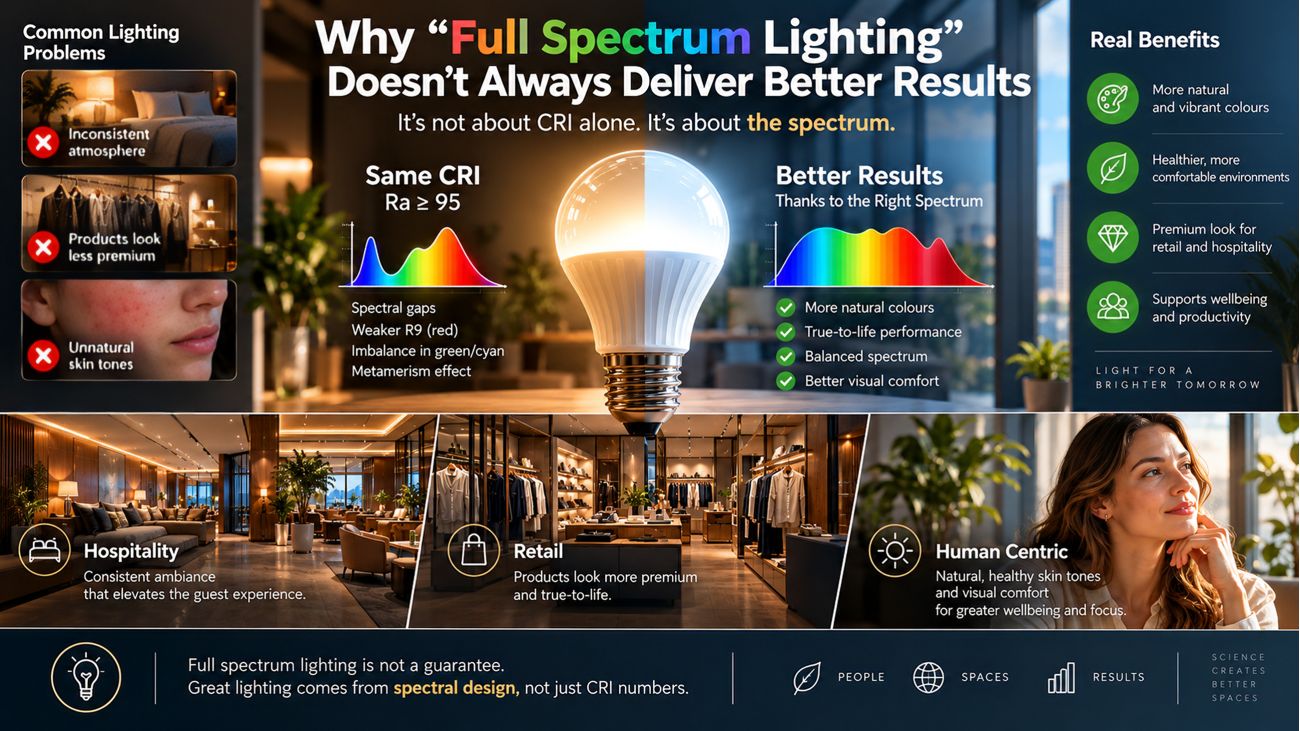
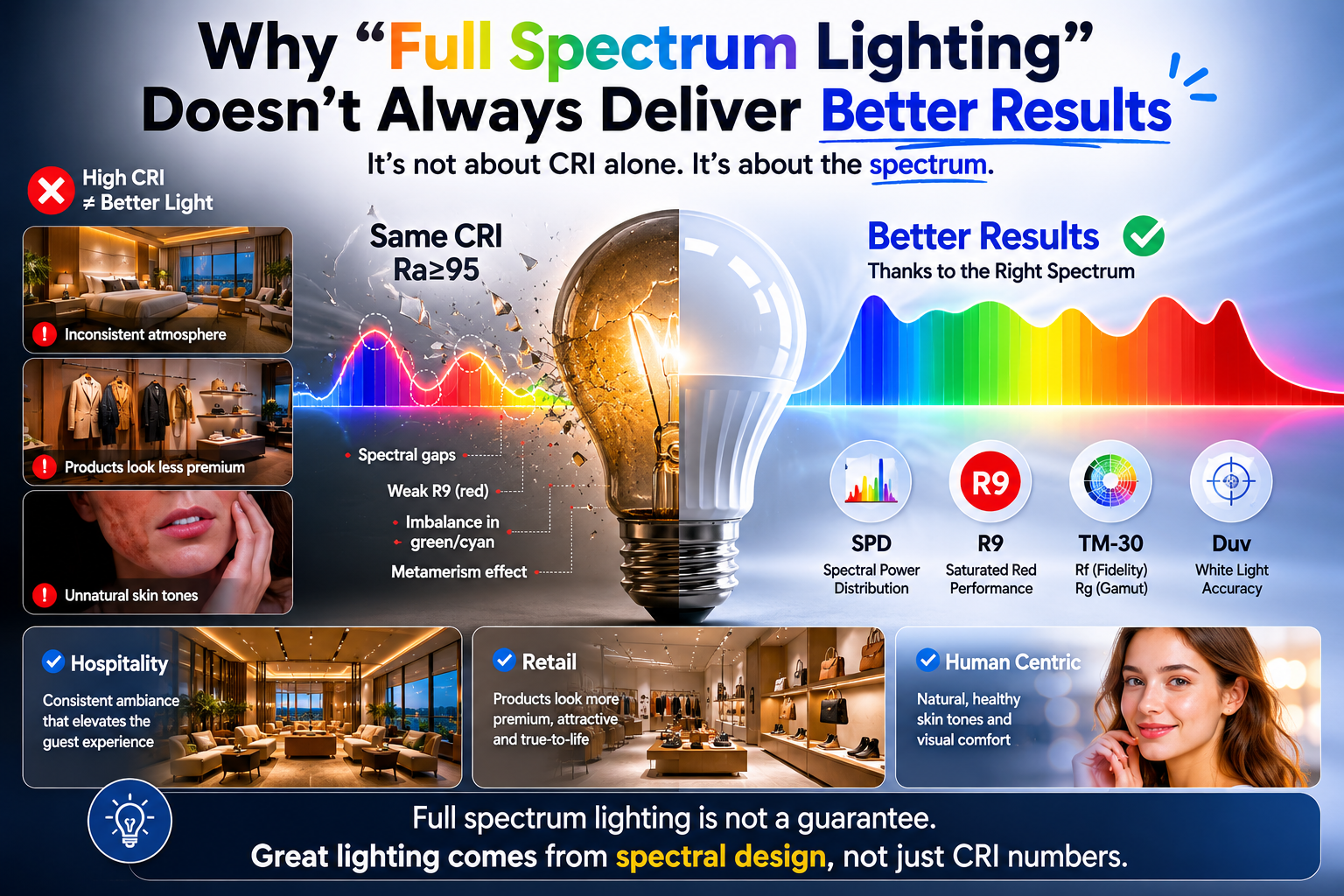
Many LED products are labeled as Full Spectrum, Ra≥95, or High CRI—yet real project results often fail to meet expectations.
Hotel spaces may look visually inconsistent
Retail products may lose their premium appeal
Skin tones can appear unnatural
So what’s really happening?
1.“Full Spectrum” Has No Standard Definition
There is no unified industry standard. In practice, it may mean:
Marketing terminology
CRI-based labeling
SPD-based design
“Full spectrum” does not equal guaranteed performance
2.High CRI (Ra≥95) Is Not Enough
CRI only reflects average color accuracy—but misses key factors:
Spectral gaps
Weak red rendering (R9)
Green/cyan imbalance
Metamerism effects
Same CRI, very different visual outcomes
3.The Real Key: SPD (Spectral Power Distribution)
SPD defines how light energy is distributed across wavelengths, directly affecting:
Skin tone rendering
Fabric & material appearance
Retail product presentation
Missing wavelengths lead to reduced visual quality
4.Why 3000K + Ra≥95 Still Looks Different
Because real performance depends on:
SPD curve structure
R9 value (red quality)
Duv deviation (white light perception)
Specs alone do not tell the full story
5.Better Evaluation Goes Beyond CRI
Professional lighting evaluation should include:
R9 (saturated red quality)
TM-30 (Rf & Rg metrics)
Duv control
SPD analysis
Final Insight
“Full spectrum lighting” is often a marketing term—not a technical guarantee.
True lighting quality comes from spectral design, not just CRI numbers.
Mobile Phone
WhatsApp:+86 19818738919
Email Address
billy@spiral-lighting.com
To the main pageNext article